
Commercial construction
$3.6 millionRecovered
Apartment-building defects, delays, and lost rents.
Read the result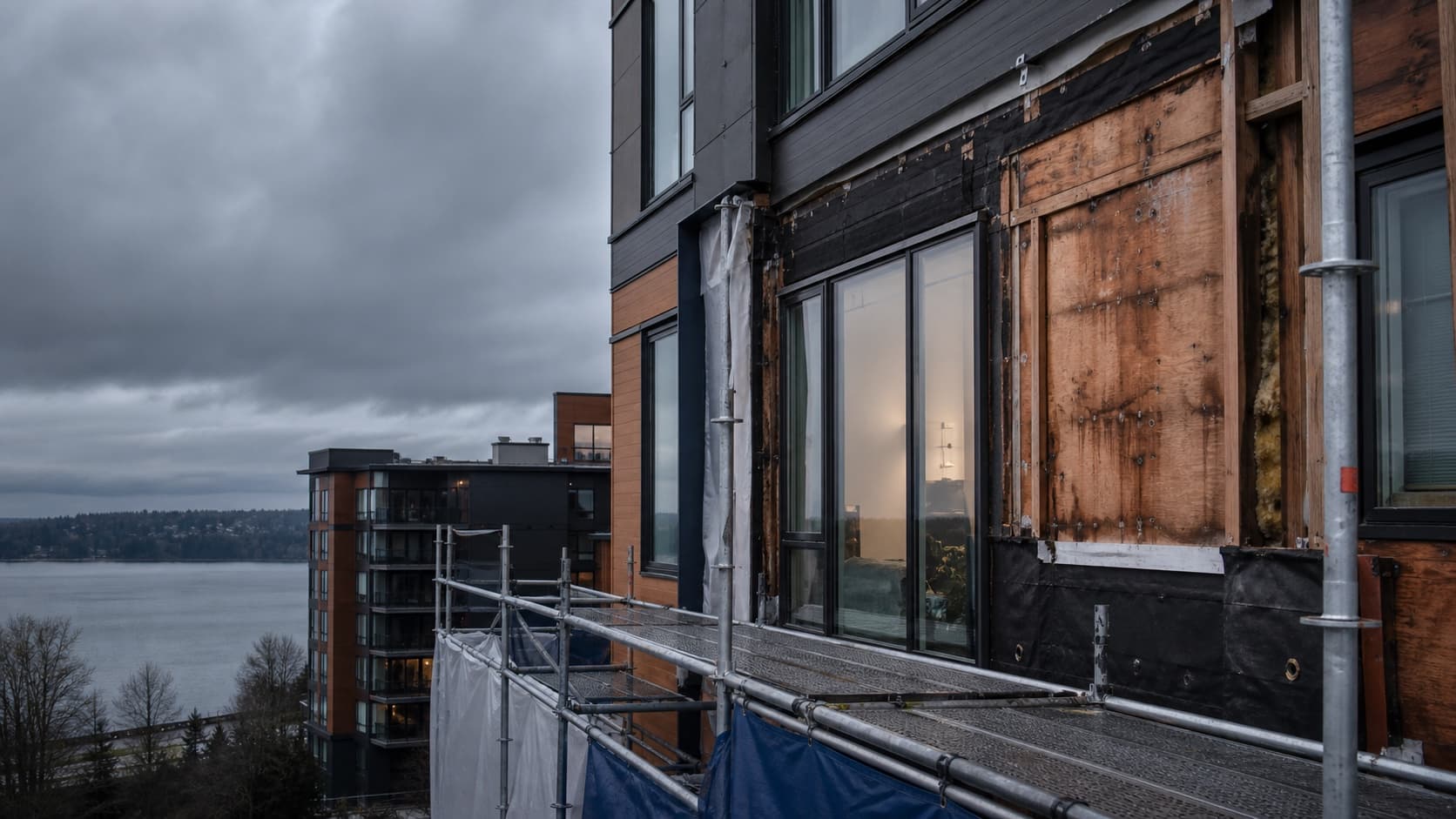
For building owners
Help for building owners facing defective work, recurring leaks, structural concerns, or failed repairs—whether the building is a home, a commercial property, or part of an owner association.
No fee unless money is recovered on accepted matters, subject to a written fee agreement.
Representative results
Apartment and condominium matters involving defective work, repair costs, and the consequences for owners.
Explore all case resultsCommercial construction
Apartment-building defects, delays, and lost rents.
Read the resultCondominium construction
Building-wide siding and window repairs for a 12-unit condominium.
Read the resultRepresentative results are examples only. Every matter depends on its own facts, evidence, timing, contracts, policies, parties, defenses, damages, and applicable law. Past results do not guarantee future outcomes.
Reading the property
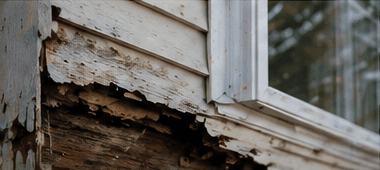
A damaged finish can be one part of a larger repair scope.
Illustrative imageryThe visible condition
Recurring moisture, cracking, or failed finishes call for questions about the underlying assembly. A record of earlier repairs helps show whether the same condition has returned.
The repair question
The review connects cause, affected materials, access, reconstruction, and cost. The proposed repair should be tested against those requirements.
So the first thing a building owner should do is document the problem. That's very important. And then, I think what the building owner should do is, if it's an insurance issue, if it's possibly covered by insurance, they should tender a claim to their insurance company. And then, if it's not an insurance issue, it might be something that's not covered in their insurance policy, then what they should do is ensure they document it, and then, if they think that the construction contractor might be responsible, Look at some of the documentation from their construction company.
The disagreement
Repeated leaks, cracking, or movement may call for investigation beyond the visible symptom. Keep a record of repair attempts and recurrence.
Compare the proposed correction with the cause, affected materials, access, and reconstruction sequence. A completed patch is not necessarily a completed repair.
Contracts, plans, communications, expert findings, and repair pricing help show what was required, what failed, and what correction involves.
Prepare for review
Start your inquiry with a short summary. Prepare these records and provide documents when the firm requests them. Address urgent safety and mitigation needs while documenting conditions when safe.
Before-repairs preservation checklistThe condition of the home, daily disruption, and the owner’s practical choices inform investigation and repair planning.
Repair planning must account for governance, reserve and assessment concerns, and the communication demands placed on volunteer leaders.
We consider the physical defect alongside tenant, operating, financing, and carrying-cost consequences that shape a practical resolution.
Sarah Harper
The claim should be properly investigated, with all parties contacted, all damage estimates received, and a liability and coverage determination made. If the carrier is not doing that and is not responding, you may want to go ahead and take the claim into your own hands by contacting your own representative, possibly an attorney, or somebody that can assess the damages for you to be able to get the supporting documentation in front of the insurance company so the claim can move forward.
The firm considers the available evidence, deadlines, repair costs, and possible responsibility before recommending deeper legal work. You can inquire even if the amount or legal category is not yet clear.